High-pressure industrial environments demand sealing solutions that deliver consistent, leak-free performance under extreme mechanical stress, fluctuating temperatures, and aggressive chemical exposure. The Stamping Jacket Gasket has emerged as the sealing component of choice across refineries, chemical processing plants, power generation facilities, and heavy-duty pipeline systems precisely because it addresses all of these challenges within a single, engineered product. Its layered construction, material versatility, and superior compressibility make it an irreplaceable component wherever operational safety and long-term reliability are non-negotiable priorities.
At Ningbo Kaxite Sealing Materials Co., Ltd., our engineering team has spent decades refining the design and production of the Stamping Jacket Gasket to meet the increasingly stringent demands of modern industry. Our products are trusted by procurement specialists, plant engineers, and maintenance managers across more than 60 countries. This article provides a comprehensive technical and practical examination of why the Stamping Jacket Gasket consistently outperforms alternative sealing technologies in high-pressure service, what product parameters matter most, and how to select the right configuration for your specific application.
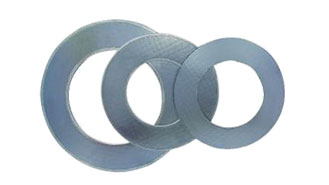
Table of Contents
- What Exactly Is a Stamping Jacket Gasket and How Is It Constructed?
- What Are the Core Technical Parameters of Our Stamping Jacket Gasket?
- Why Does the Stamping Jacket Gasket Outperform Other Gasket Types in High-Pressure Conditions?
- What Industries and Applications Rely Most Heavily on Stamping Jacket Gaskets?
- How Should Engineers Select and Install a Stamping Jacket Gasket Correctly?
- What Quality Standards and Certifications Back Our Stamping Jacket Gasket Products?
- Conclusion
- FAQ
What Exactly Is a Stamping Jacket Gasket and How Is It Constructed?
A Stamping Jacket Gasket is a precision-engineered sealing element composed of a soft, compressible filler core encased within a formed metallic outer jacket. The jacket is manufactured through a stamping process that precisely shapes a thin metal sheet into a profile that completely encloses the filler material on all exposed sides. This construction method produces a gasket that combines the conformability of soft sealing materials with the structural protection and mechanical resilience of metal, resulting in a product that excels in environments where neither purely soft gaskets nor fully metallic gaskets are adequate on their own.
The outer metal jacket is typically fabricated from stainless steel, carbon steel, soft iron, Monel, Inconel, or other alloys selected to match the corrosive and thermal profile of the target application. The inner filler can be ceramic fiber, graphite, PTFE, mineral fiber, or non-asbestos fiber depending on the temperature range, media compatibility, and pressure class required. At Ningbo Kaxite Sealing Materials Co., Ltd., our stamping process is executed on precision tooling that maintains tight dimensional tolerances, ensuring consistent jacket thickness, filler density, and overall gasket height across every production batch.
Key structural features of the Stamping Jacket Gasket include:
- Full-perimeter metallic enclosure that shields the filler from direct media contact and physical damage during installation
- Precisely controlled jacket overlap at the sealing face to optimize contact stress distribution
- Uniform filler compression characteristics that ensure predictable bolt load requirements
- Available in flat ring, oval ring, full-face, and custom profiles to suit diverse flange geometries
- Optional inner and outer centering rings to maintain alignment under thermal cycling
- Surface finish options on the jacket face ranging from smooth to serrated to enhance micro-sealing performance
The stamping jacket manufacturing approach also allows our factory to produce gaskets in virtually any inner diameter, outer diameter, and thickness combination, making it straightforward to supply both standard pressure-class dimensions and fully custom sizes for non-standard flanges, heat exchangers, pressure vessels, and specialty valves.
What Are the Core Technical Parameters of Our Stamping Jacket Gasket?
Selecting the correct Stamping Jacket Gasket requires a thorough understanding of the technical parameters that govern sealing performance. The table below summarizes the principal specifications available from Ningbo Kaxite Sealing Materials Co., Ltd., covering the full range of our standard and engineered product offerings.
| Parameter | Standard Range | Notes |
| Nominal Size | DN15 to DN2000 (custom beyond) | Covers ASME, EN, JIS, and GB flange standards |
| Pressure Class | Class 150 to Class 2500 (ASME); PN6 to PN420 (EN) | Higher classes available on request |
| Maximum Operating Temperature | -200 degrees C to +1000 degrees C | Dependent on filler and jacket material combination |
| Maximum Operating Pressure | Up to 420 bar (6090 psi) | Verified by hydrostatic and pneumatic testing |
| Jacket Material Options | SS304, SS316, SS321, Carbon Steel, Soft Iron, Monel 400, Inconel 625, Hastelloy C276, Titanium | Selected based on media and temperature |
| Filler Material Options | Flexible Graphite, PTFE, Ceramic Fiber, Non-Asbestos Fiber, Mineral Fiber, Mica | Graphite and PTFE are most commonly specified |
| Standard Thickness | 1.5 mm, 2.0 mm, 3.0 mm, 4.5 mm, 6.0 mm | Custom thicknesses manufactured to drawing |
| Jacket Thickness | 0.3 mm to 1.0 mm | Thicker jackets for abrasive or high-velocity media |
| Sealing Surface Finish | Smooth, Serrated Concentric, Serrated Spiral | Matched to flange face finish per ASME B16.20 |
| Applicable Flange Face | Raised Face (RF), Full Face (FF), Ring Type Joint (RTJ), Tongue and Groove (T&G), Male and Female (M&F) | Custom profiles available |
| Applicable Media | Steam, Hydrocarbons, Acids, Alkalis, Solvents, Cryogenic Fluids, Hot Gases, Slurries | Material selection critical for chemical compatibility |
| Compressive Load at Seating | 20 MPa to 150 MPa | Lower loads achievable with graphite filler |
| Certification | ISO 9001:2015, CE, SGS, TA-Luft, API 6A | Full material traceability certificates available |
Beyond the parameters listed above, our factory maintains the following additional material performance benchmarks that are regularly tested and documented in our product quality records:
- Creep relaxation resistance: less than 5 percent loss of bolt load after 1000 hours at rated temperature
- Blow-out resistance: tested to 1.5 times maximum allowable working pressure per ASME PCC-1
- Recovery rate after compression: minimum 15 percent to accommodate flange rotation and thermal cycling
- Surface roughness of jacket sealing face: Ra 0.8 to Ra 3.2 micrometers depending on specified finish
- Dimensional tolerance on thickness: plus or minus 0.1 mm for standard sizes
Why Does the Stamping Jacket Gasket Outperform Other Gasket Types in High-Pressure Conditions?
The superiority of the Stamping Jacket Gasket in high-pressure service is not a matter of marketing preference. It is rooted in a set of measurable performance characteristics that directly address the failure modes most commonly observed with alternative sealing technologies. Understanding these advantages helps engineers make defensible, specification-compliant sealing decisions.
Compared to spiral wound gaskets, jacketed ring gaskets, and soft cut gaskets, the Stamping Jacket Gasket offers a distinct combination of benefits that are particularly valuable in demanding service conditions:
- Uniform contact pressure distribution: The stamped metal jacket redistributes bolt clamping load evenly across the entire sealing face, eliminating localized stress concentrations that can cause flange distortion or gasket extrusion in high-pressure service.
- Filler containment under pressure excursions: The fully enclosed jacket prevents the soft filler from extruding or blowing out during pressure surges, water hammer events, or emergency overpressure scenarios, maintaining sealing integrity where open-face gaskets would fail.
- Superior recovery after thermal cycling: Industrial plants experience frequent start-up and shutdown cycles that impose significant thermal expansion and contraction loads on flanged joints. Our Stamping Jacket Gasket maintains adequate sealing stress across these cycles due to the elastic recovery characteristics built into the jacket geometry.
- Resistance to aggressive media attack: The metallic jacket acts as a sacrificial barrier, protecting the filler from direct chemical exposure. This allows the use of cost-effective filler materials like graphite in environments where the media would otherwise degrade an unprotected soft gasket rapidly.
- Reduced bolt load requirements: Compared to solid metal gaskets and ring type joints, the Stamping Jacket Gasket achieves a reliable seal at significantly lower bolt loads, reducing flange bending stress and allowing use on lighter flange classes without compromising safety margins.
- Compatibility with damaged or worn flange faces: The compressible filler within the jacket accommodates minor surface defects, scratches, and waviness on aged flange faces, reducing the need for costly flange refacing in maintenance applications.
At Kaxite Sealing, our engineering team has conducted extensive comparative testing across all major gasket categories. Our data consistently demonstrates that the Stamping Jacket Gasket provides a sealing efficiency factor (m factor) and minimum seating stress (y factor) that position it as the optimal choice for Class 600 and above pressure service, high-temperature steam systems, hydrogen service, and applications involving cyclic pressure loading.
The following comparison table summarizes the performance positioning of the Stamping Jacket Gasket relative to the most commonly specified alternatives:
| Performance Attribute | Stamping Jacket Gasket | Spiral Wound Gasket | Soft Cut Gasket | Solid Metal Gasket |
| High-Pressure Performance | Excellent | Good | Poor | Excellent |
| Thermal Cycling Resistance | Excellent | Good | Fair | Good |
| Bolt Load Requirement | Moderate | Moderate | Low | High |
| Filler Extrusion Resistance | Excellent | Good | Poor | N/A |
| Chemical Resistance Versatility | Excellent | Good | Fair | Good |
| Compatibility with Worn Flanges | Good | Fair | Good | Poor |
| Reusability | Limited | Not recommended | Not recommended | Limited |
| Cost Efficiency | High | Moderate | High (initial) | Low |
What Industries and Applications Rely Most Heavily on Stamping Jacket Gaskets?
The Stamping Jacket Gasket is not a niche product. It is a broadly specified sealing solution that appears in the bill of materials for critical equipment across virtually every sector of heavy industry. Its ability to handle the combined demands of high pressure, elevated temperature, and chemical aggressiveness makes it particularly well-suited to the following sectors, where our products have established a strong and growing customer base.
Oil and Gas Refining
Refineries operate an enormous number of high-pressure flanged connections in crude distillation units, hydrotreaters, catalytic crackers, and associated piping networks. Our Stamping Jacket Gasket is specified extensively in these systems for its ability to maintain seal integrity under the hydrogen partial pressures and elevated temperatures that characterize refinery reactor circuits. The graphite-filled SS316 jacket configuration is among our most frequently ordered product combinations in this sector.
Petrochemical and Chemical Processing
Chemical plants impose some of the most chemically aggressive conditions encountered in any industrial environment. Our factory produces jacket gaskets with Hastelloy C276 and Inconel outer jackets paired with PTFE filler for service in concentrated acid systems, chlorine handling equipment, and solvent processing units where corrosion resistance is the primary selection driver.
Power Generation
Steam turbine systems, boiler feedwater circuits, and heat recovery steam generators all rely on dependable sealing at pressures up to 250 bar and temperatures exceeding 550 degrees C. Our high-temperature graphite-filled stamped jacket configurations have been validated in supercritical steam service and are supplied to power plant operators and EPC contractors globally.
Shipbuilding and Marine Engineering
Marine propulsion systems, ballast water treatment equipment, and offshore platform pipework all demand sealing solutions that combine pressure resistance with resistance to seawater corrosion. Our duplex stainless steel and titanium jacket options serve this market segment with proven long-term performance.
Pharmaceutical and Food Processing
Hygienic process industries require gaskets that maintain seal integrity without contaminating process streams. Our PTFE-filled, polished SS316L jacket gaskets meet FDA and EC 1935/2004 material compliance requirements and are used in autoclave, sterilization, and clean-in-place pipeline systems.
Heat Exchangers and Pressure Vessels
Shell-and-tube heat exchangers use large-diameter gaskets in their channel cover and shell flange connections. Our factory manufactures oversized and custom-profile Stamping Jacket Gaskets for this application, including double-jacketed configurations for critical heat exchanger services where single-layer protection is insufficient.
How Should Engineers Select and Install a Stamping Jacket Gasket Correctly?
Proper gasket selection and installation are as important as the gasket design itself. Even the highest-quality Stamping Jacket Gasket will underperform if it is sized incorrectly, paired with an incompatible flange, or installed using improper bolt tightening procedures. Our technical team at Ningbo Kaxite Sealing Materials Co., Ltd. provides application engineering support to help customers navigate these decisions, but the following principles represent the foundational guidelines that every engineer should apply.
Selection Criteria
- Define the operating pressure, temperature, and media clearly before selecting jacket and filler materials. Do not rely on generic material compatibility charts alone; verify compatibility with actual process media concentrations and temperature combinations.
- Match the gasket profile and dimensions to the flange standard, pressure class, and face type. Raised face flanges require a different gasket geometry than tongue-and-groove or full-face flanges.
- Confirm the available bolt load is sufficient to achieve minimum seating stress on the gasket while remaining within the allowable flange bolt load for the pressure class.
- For cyclic service or high-vibration applications, specify a graphite filler configuration rather than a ceramic or mineral fiber filler, as graphite provides superior recovery and creep resistance under dynamic loading.
- If the system is subject to cryogenic service below minus 100 degrees C, specify our low-temperature tested materials to ensure jacket ductility is maintained and filler does not become brittle at service temperature.
Installation Best Practices
- Inspect the flange faces for damage, corrosion, and surface finish before installation. Flange face roughness should be within the range specified for the gasket surface finish selected.
- Clean the flange faces thoroughly and remove all remnants of the previous gasket, thread lubricants, and process deposits.
- Do not apply any lubricant, sealant, or adhesive to the gasket sealing faces unless specifically recommended by our technical team for the application in question.
- Insert the gasket centrally within the flange bore. Use flange alignment pins or guides where available to prevent off-center installation that reduces effective sealing width.
- Lubricate bolt threads and nut bearing faces with a suitable anti-seize compound before assembly. Tighten bolts in a cross-pattern sequence using calibrated torque wrenches or hydraulic bolt tensioners.
- Perform the final bolt tightening in a minimum of three passes at 30 percent, 70 percent, and 100 percent of target torque, followed by a final pass to verify no further rotation occurs.
- For systems subject to elevated temperature service, perform a hot retorque procedure after the first thermal cycle to compensate for initial gasket seating and stress relaxation in the bolt assembly.
| Installation Step | Required Action | Common Mistake to Avoid |
| Flange Face Inspection | Check for pitting, scratches, and waviness | Installing over damaged flanges without repair |
| Gasket Sizing Verification | Confirm ID, OD, and thickness match flange drawing | Using a previous gasket as a template without checking |
| Bolt Lubrication | Apply anti-seize to threads and nut faces | Installing dry bolts that produce inconsistent clamping load |
| Cross-Pattern Tightening | Three-pass torque sequence per ASME PCC-1 | Sequential or single-pass tightening causing uneven seating |
| Hot Retorque | Retighten after first thermal cycle | Skipping retorque and accepting early leakage as normal |
What Quality Standards and Certifications Back Our Stamping Jacket Gasket Products?
In high-pressure industrial applications, the quality assurance framework behind a gasket product is as important as its technical specifications. End users, EPCs, and operating companies require confidence that every gasket shipped from our factory meets the dimensional, material, and performance standards specified in their engineering documents. Ningbo Kaxite Sealing Materials Co., Ltd. has built a comprehensive quality management system that addresses every stage of the product lifecycle from raw material procurement through final inspection and shipment documentation.
Our quality and certification framework includes the following key elements:
- ISO 9001:2015 Certification: Our quality management system has been independently certified to ISO 9001:2015, covering the design, manufacture, inspection, and supply of all sealing products including our full range of Stamping Jacket Gasket configurations. Annual surveillance audits verify continued compliance.
- Material Traceability: Every metallic jacket material and filler material used in our products is traceable to mill certificates that verify chemical composition and mechanical properties. Material test reports are available for all orders and are supplied with shipment documentation as standard practice.
- Dimensional Inspection: All gaskets are inspected for inner diameter, outer diameter, thickness, and surface finish using calibrated measuring instruments. Statistical process control records are maintained for all critical dimensions across production batches.
- Pressure Performance Testing: Representative samples from each production run are tested using hydrostatic and pneumatic methods to verify leak-free performance at rated pressure. Test records are retained and available for customer review on request.
- TA-Luft Compliance: Our graphite-filled Stamping Jacket Gasket configurations have been tested and certified to TA-Luft VDI 2440 fugitive emissions standards, qualifying them for use in VOC-controlled process environments in the European Union and globally where equivalent emission regulations apply.
- API 6A and API 601 Compliance: Our ring and jacket gasket designs for wellhead and pipeline service are manufactured and tested in accordance with API specifications, supporting use in upstream oil and gas applications where API certification is a procurement prerequisite.
- ASME B16.20 Dimensional Compliance: Standard pressure-class gasket dimensions conform to ASME B16.20, ensuring dimensional interchangeability with all major flange manufacturers and eliminating installation compatibility issues.
- RoHS and REACH Compliance: Our product materials are verified for compliance with European RoHS and REACH chemical substance regulations, supporting use in environmentally regulated manufacturing environments.
Beyond formal certifications, our factory operates a customer complaint and corrective action system that tracks all field performance feedback and drives continuous improvement in product design and manufacturing processes. Our technical team is available to support root cause analysis for any sealing performance issue encountered in service, providing a level of after-sales engineering support that few gasket suppliers can match.
Conclusion
The Stamping Jacket Gasket has earned its dominant position in high-pressure industrial sealing through decades of proven performance across the most demanding applications in oil and gas, power generation, chemical processing, and related sectors. Its unique combination of metallic jacket protection, compressible filler sealing performance, and broad material compatibility addresses the real-world challenges that plant engineers and reliability professionals face every day. No other gasket technology delivers the same balance of sealing efficiency, installation flexibility, and long-term operational reliability across such a wide range of pressure, temperature, and chemical service conditions.
At Ningbo Kaxite Sealing Materials Co., Ltd., our commitment goes beyond supplying a standard product. Our technical team works closely with customers to define the optimal Stamping Jacket Gasket specification for each application, providing material selection support, installation guidance, and quality documentation that meets the most stringent project requirements. Our factory is equipped with modern stamping and tooling infrastructure that allows us to manufacture standard catalog dimensions and fully custom profiles with equal precision and quality assurance.
If you are evaluating sealing solutions for a new project, planning a plant turnaround, or looking to improve the reliability of existing flanged joints in high-pressure service, our engineering team is ready to assist. Contact Ningbo Kaxite Sealing Materials Co., Ltd. today to request a technical consultation, product samples, or a detailed quotation. Our team responds to all technical inquiries within one business day and can provide application-specific recommendations backed by full material certification and test documentation. Let our experience and product quality become a reliable part of your operational success.
FAQ
Q1: What is the maximum pressure rating achievable with a Stamping Jacket Gasket from Ningbo Kaxite Sealing Materials Co., Ltd.?
Our standard Stamping Jacket Gasket product range is rated to a maximum operating pressure of 420 bar (approximately 6090 psi) for Class 2500 flange service. This rating is achieved with heavy-gauge metallic jacket configurations, high-density graphite filler, and precision-machined sealing surfaces. For applications exceeding this pressure level, our engineering team can design custom double-jacketed or reinforced configurations tested and certified to the specific pressure requirement. All pressure ratings are validated through hydrostatic proof testing at 1.5 times the maximum allowable working pressure before shipment, and full test records are provided with the delivery documentation.
Q2: How do I determine whether a graphite filler or a PTFE filler is more appropriate for my Stamping Jacket Gasket application?
The choice between graphite and PTFE filler depends primarily on three factors: operating temperature, media chemistry, and required seating stress. Flexible graphite is the preferred filler for steam service, hydrocarbon systems, and high-temperature applications up to 550 degrees C in oxidizing environments and up to 650 degrees C in non-oxidizing conditions. It also provides superior creep resistance and recovery under cyclic loading. PTFE filler, by contrast, is the correct choice for strong acid service, chlorine handling, pharmaceutical processing, and any application where graphite might react with the process media or where FDA material compliance is required. PTFE has a lower maximum temperature limit of approximately 260 degrees C and requires slightly higher bolt loads to achieve full seating. Our application engineering team reviews every inquiry to confirm the appropriate filler selection before issuing a formal recommendation.
Q3: Can a Stamping Jacket Gasket be reused after disassembly during maintenance work?
Reuse of a Stamping Jacket Gasket after disassembly is generally not recommended and should be avoided wherever possible. Once a gasket has been subjected to bolt clamping load in service, the filler material undergoes permanent plastic deformation that reduces its ability to conform to flange surface irregularities in a subsequent assembly. Additionally, the metallic jacket may have experienced minor distortion during initial tightening or thermal cycling. Reinstalling a used gasket introduces an elevated risk of joint leakage, particularly in high-pressure service where the consequences of a sealing failure are significant from a safety and operational continuity perspective. Our recommendation is to treat all Stamping Jacket Gaskets as single-use components and to include replacement gaskets as a standard item in every plant turnaround bill of materials. The cost of a new gasket is negligible compared to the cost of an unplanned shutdown caused by a reused gasket failure.
Q4: What flange face conditions are acceptable for use with a Stamping Jacket Gasket, and when is refacing required?
A Stamping Jacket Gasket can tolerate moderate surface imperfections on flange faces better than solid metal or semi-metallic ring type joint gaskets, because the compressible filler within the jacket accommodates minor surface variations. Acceptable flange face conditions include surface roughness within the range Ra 3.2 to Ra 6.3 micrometers for raised face flanges per ASME B16.5, with no radial scratches, corrosion pitting deeper than 0.25 mm, or waviness exceeding 0.1 mm across the gasket seating width. Flanges exhibiting radial scratches that extend continuously across the seating face, pitting corrosion deeper than the threshold, or physical damage from previous gasket removal must be refaced before installing a new Stamping Jacket Gasket. Our technical team can assess flange face condition photographs submitted by customers and provide a formal recommendation on whether refacing is required or whether the existing condition is acceptable for the service class involved.
Q5: How does the Stamping Jacket Gasket perform in cryogenic service applications such as LNG and liquid nitrogen systems?
Cryogenic service presents unique challenges for gasket materials because many metals and fillers lose ductility and sealing performance at temperatures below minus 100 degrees C. Our cryogenic-grade Stamping Jacket Gasket is specifically designed and tested for service in liquefied natural gas, liquid nitrogen, liquid oxygen, and similar cryogenic media. For these applications, our factory uses austenitic stainless steel jacket materials with verified impact toughness at cryogenic temperatures per ASTM A240 and equivalent standards, paired with expanded PTFE or flexible graphite filler that maintains adequate compressibility and recovery at low temperatures. All cryogenic-grade gaskets undergo low-temperature leak testing as part of our standard quality assurance protocol before shipment. Customers specifying Stamping Jacket Gaskets for cryogenic service should indicate the minimum design temperature in their inquiry so that our engineering team can confirm the appropriate material combination and testing protocol for the application.